Many adult piano students believe that nerves disappear once you become a better player.
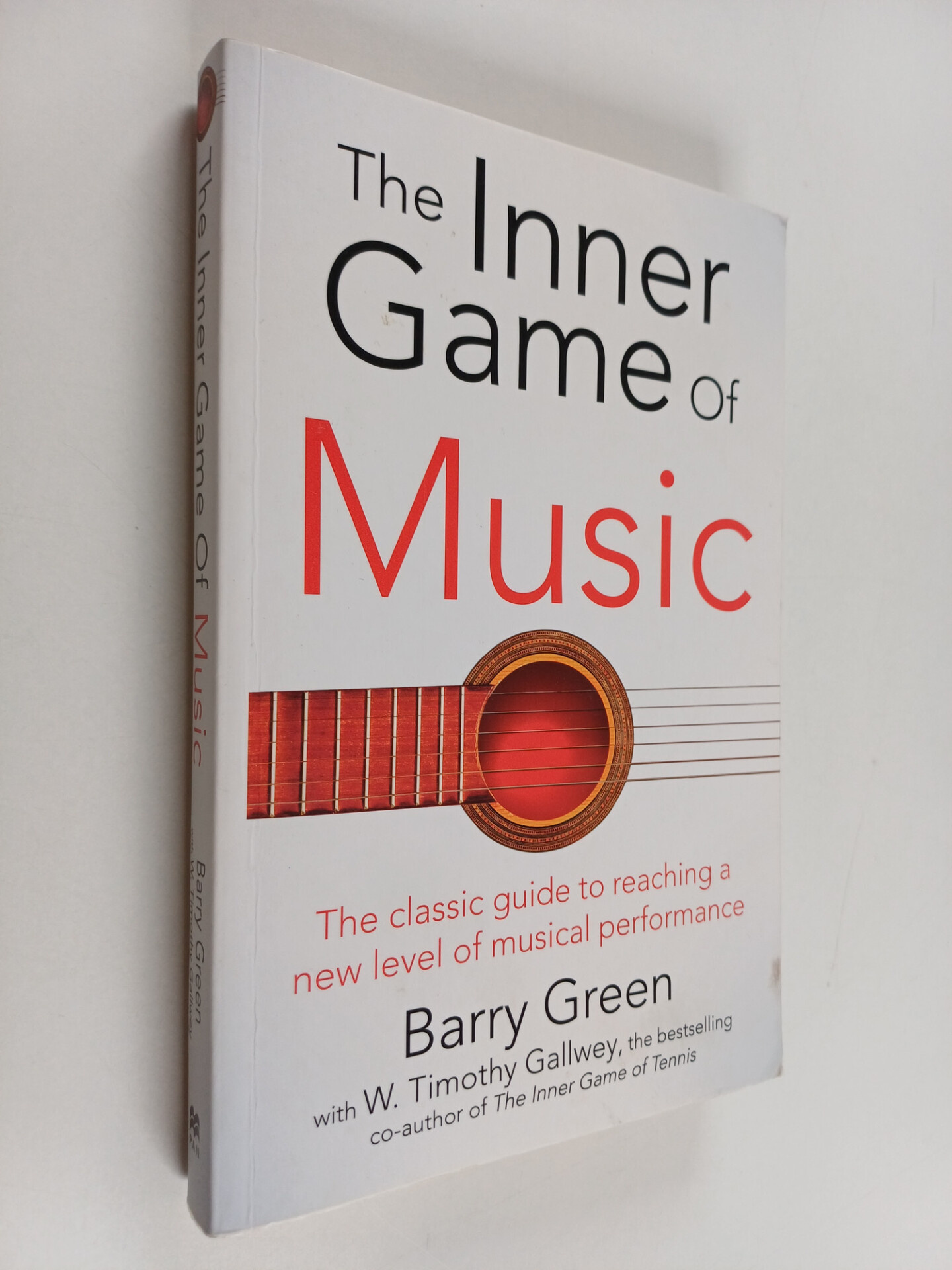
Barry Green’s The Inner Game of Music suggests something quite different: our biggest obstacle is often not our musical ability, but the voice in our head that constantly judges, criticises and worries.
Green describes two parts of the mind. Self 1 is the inner critic. It says things like, “Don’t make a mistake,” “You’re too slow,” or “Everyone will notice if you get this wrong.” Self 1 is well-meaning. It wants to protect us. But in trying so hard to control everything, it often creates tension, anxiety and mistakes.
Self 2 is the part of you that already knows how to learn. It is your natural musical ability, your intuition and your body’s remarkable capacity to develop skills through experience. Think about learning to ride a bicycle. You didn’t master it by analysing every movement. Your body gradually learned through practice. Playing the piano works in much the same way.
One of the book’s most important lessons is to replace judgement with observation.
Instead of saying: “I played that terribly.”
Try saying: “I rushed the left hand in bar 12.”
The first statement attacks you as a person. The second simply describes what happened. Once you observe accurately, your brain is far better equipped to make adjustments.
This idea can completely change the way you practise. Rather than constantly stopping to criticise yourself, become curious. Listen carefully. Notice how something feels. Experiment. Treat practice as exploration rather than a test you have to pass.
Another key idea is that attention is more powerful than effort.
Many students try to improve by concentrating harder or tensing up. Ironically, this often makes playing worse. Instead, Green encourages us to focus gently on something simple, such as the sound of the melody, the weight of our fingertips, or the rhythm of our breathing. When attention is calm and clear, the body often organises itself more efficiently than when we try to force every movement.
The book also reminds us that mistakes are information, not evidence of failure.
Professional musicians make mistakes too. What separates experienced performers is not perfection, but their response. They notice what happened, stay present, and keep going. Every mistake provides useful feedback about what needs more attention in practice.
Performance nerves often come from imagining future problems:
“What if I forget?”
“What if people judge me?”
“What if I embarrass myself?”
These thoughts pull us away from the present moment. Green encourages performers to return their attention to what is happening right now: the sound, the phrase, the breathing, the keys beneath their fingers. Music happens one note at a time, never all at once.
For adult learners, this can be especially liberating. Many adults carry expectations that they should learn quickly or play perfectly. But learning any musical skill is a gradual process. Progress is rarely a straight line. Some days everything clicks. Other days feel frustrating. Both are normal parts of learning.
Perhaps the most encouraging message in The Inner Game of Music is that you do not need to become fearless before performing. Courage is not the absence of nerves. It is learning not to let those nerves take control.
Instead of trying to silence your inner critic completely, simply notice it, thank it for trying to help, and gently return your attention to the music. Every time you do this, you strengthen your ability to trust yourself.
Practical reminders before you play:
- Focus on making music, not avoiding mistakes
- Observe rather than judge
- Replace perfection with curiosity
- Breathe, listen and stay in the present moment
- Trust that your practice is already within you
- Remember that your audience wants to enjoy your music, not inspect your errors
The goal is not to become a perfect pianist. The goal is to become a freer, more expressive musician who enjoys making music. When we quieten the inner critic and learn to trust our natural ability to learn, playing becomes less about fear and more about communication, creativity and joy.
If you are interested in this topic further, please contact me regarding the workbook I am putting together with practical ideas to put these methods into your practice!
